Snow
The frozen crowns of the highest peaks. Above the snow line nothing takes root — only pale, wind-scoured ice.
- Elevation
- above 165 m
- Moisture
- any
- Plant density
- 0%
Flora: none — barren peaks
The Living World
Every FloraForge landscape is sorted into derived biomes, and each biome decides which plants take root. This is a field guide to that biology — the five terrain zones the world is carved into, and the eight plant species that grow across them, each one a fully procedural tree, shrub or reed.
From the world
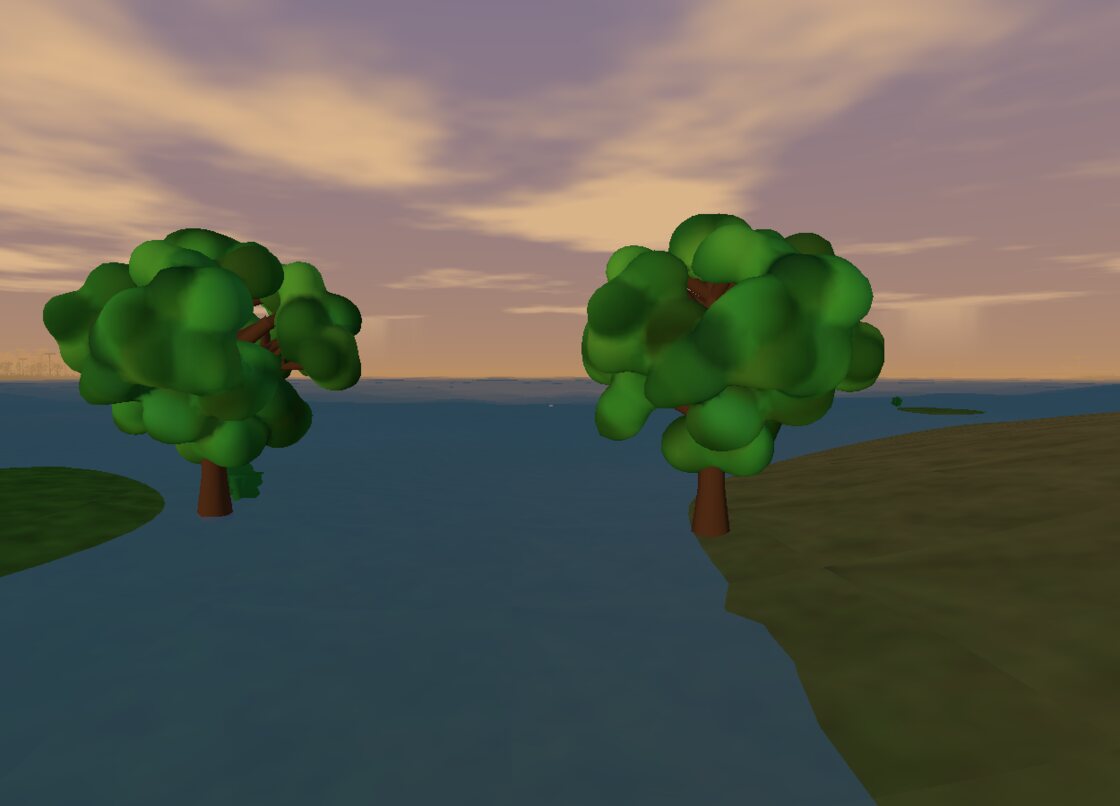
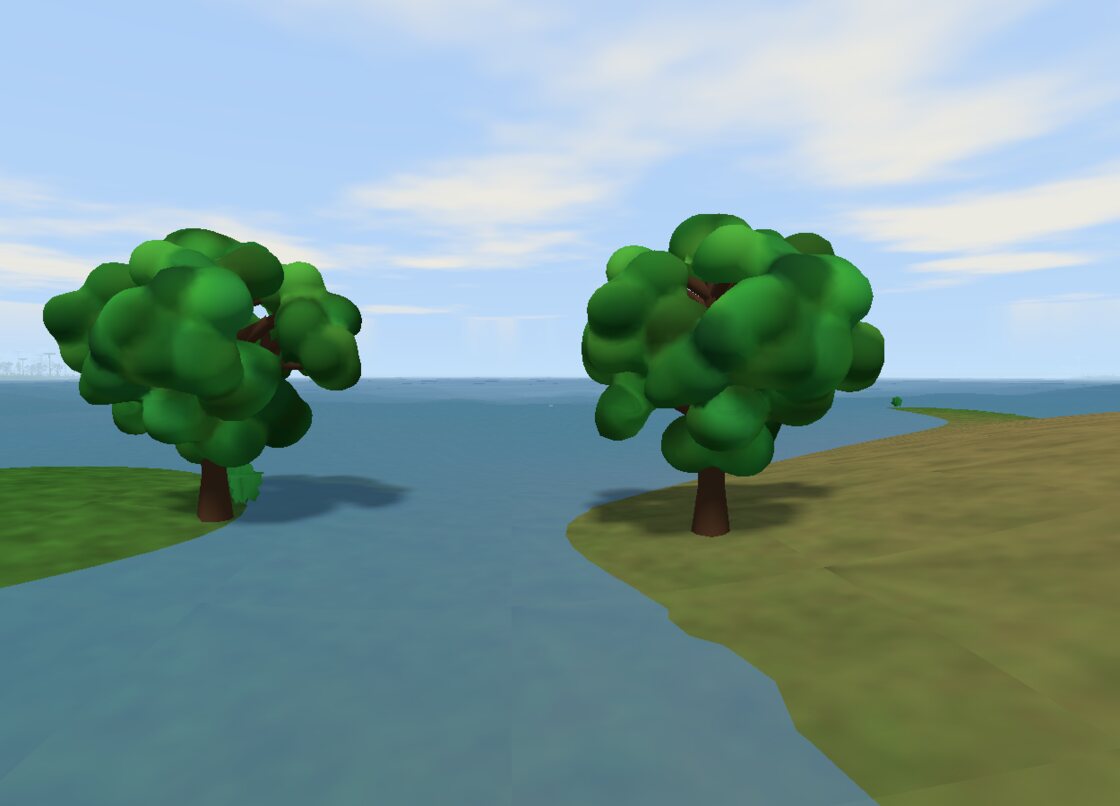
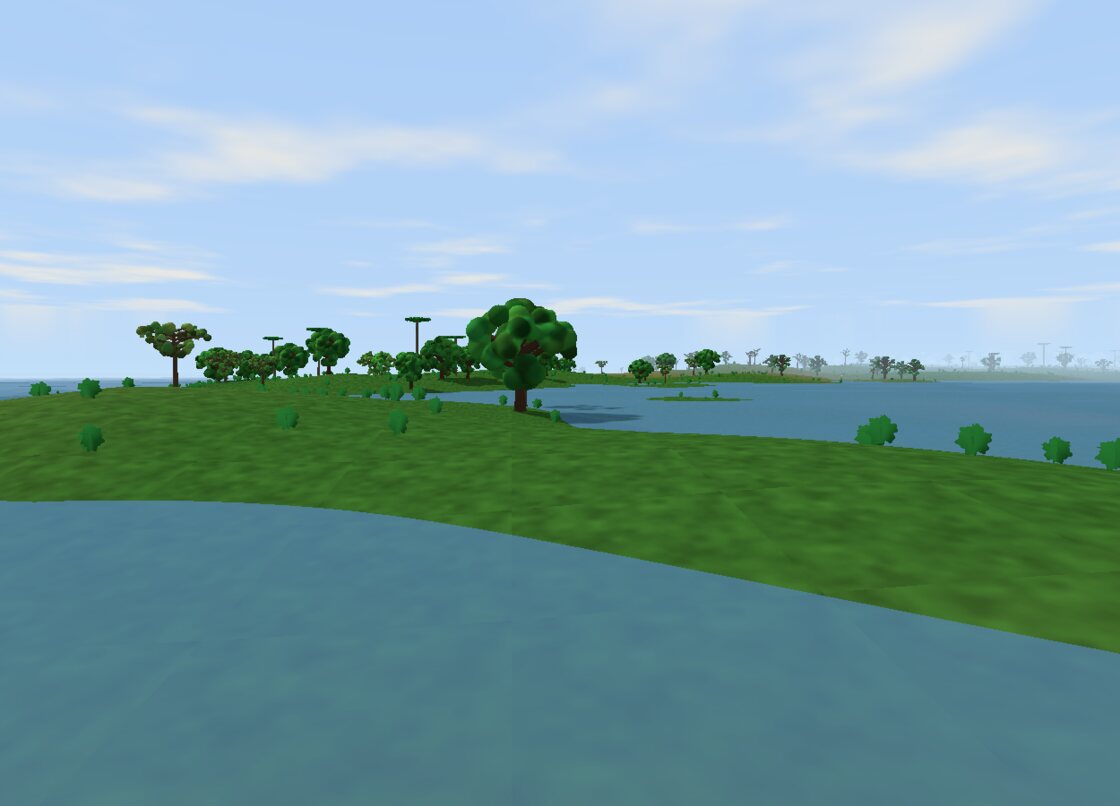
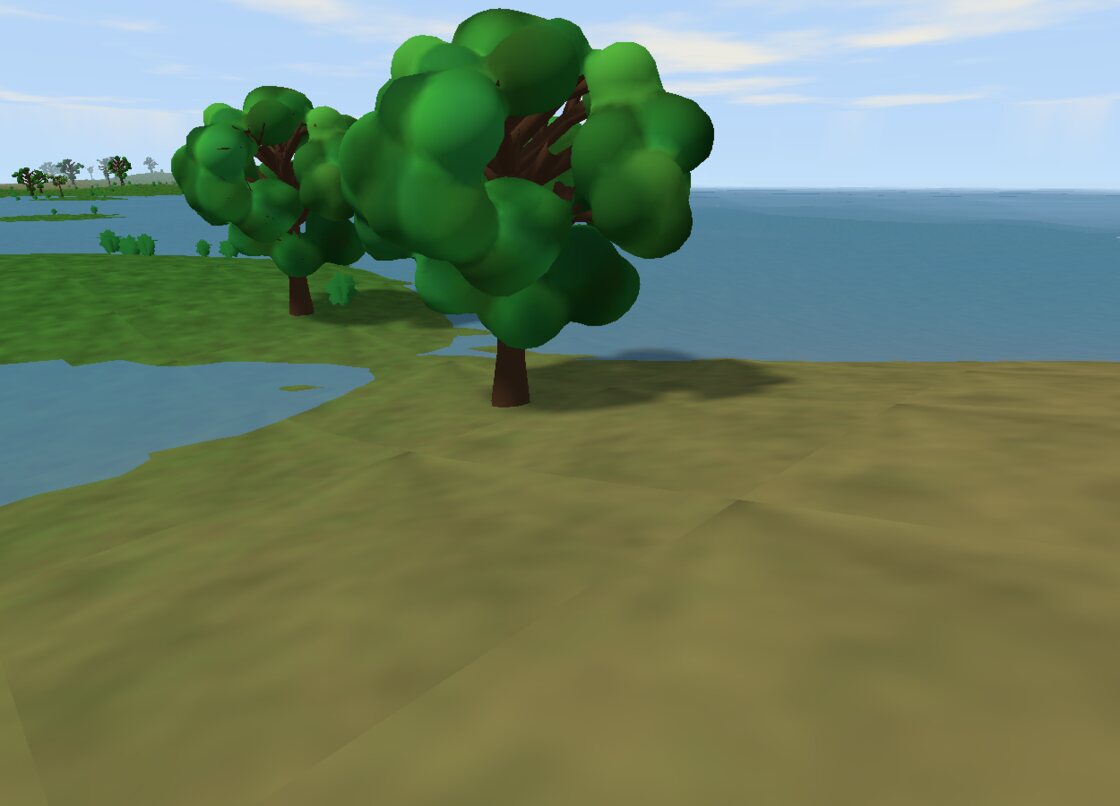
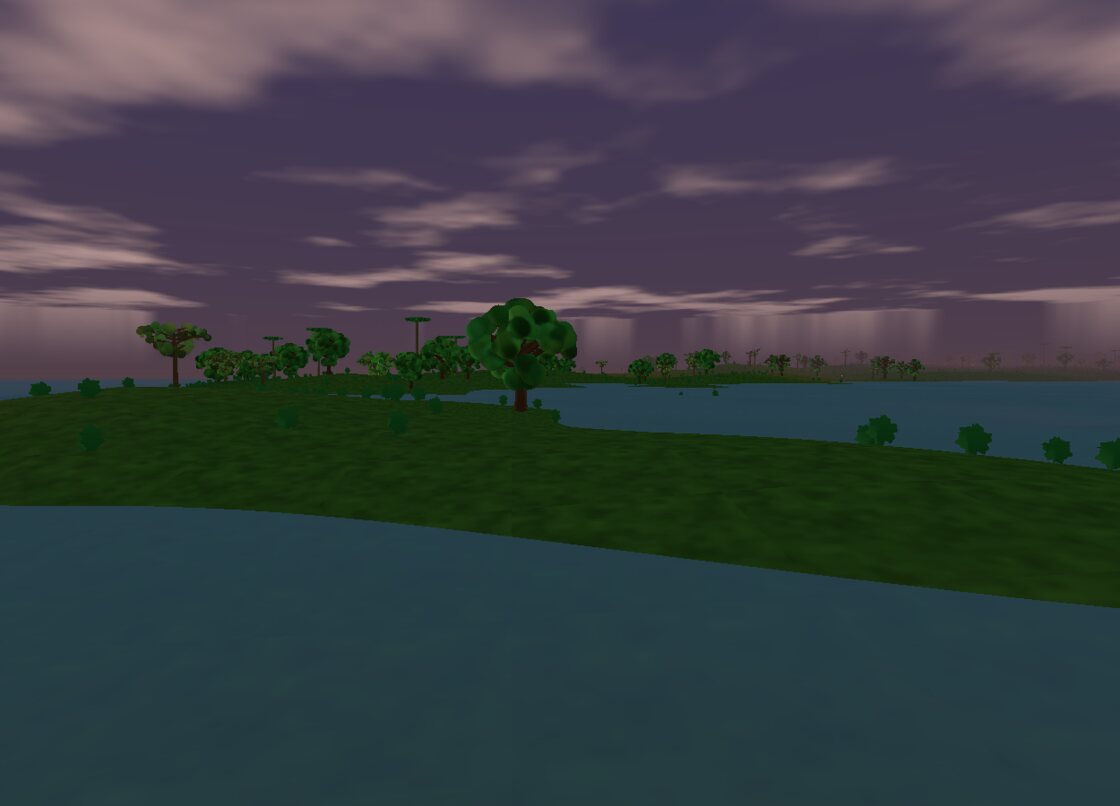
Frames captured directly from the running engine — terrain, vegetation, and the day/night lighting that ties them together.
Biomes
Two values decide everything about a patch of ground: how high it sits (elevation) and how wet it is (moisture). Climb high enough and vegetation gives way to bare rock and snow; down in the lowlands, moisture alone separates parched desert from dense forest. Each zone paints the terrain a different colour and sets how thickly plants are allowed to grow.
The frozen crowns of the highest peaks. Above the snow line nothing takes root — only pale, wind-scoured ice.
The grey shoulder of the mountains, between the tree line and the snow. Steep, exposed and bare.
Dry, sandy lowland where moisture runs out. Only the hardiest, drought-adapted trees stand a chance, and even then only just.
Open, rolling plains with scattered trees and shrubs. The world's most varied zone — it can host nearly anything that isn't a die-hard forest dweller.
Wet, low-lying land thick with canopy. The densest biome by far — up to seven plants in ten cells — and home to every woodland species.
Elevation is checked first: above 165 m is snow, 120–165 m is rock. Only below the tree line does moisture take over, splitting the lowlands into desert, grassland and forest.
Species
No two trees in FloraForge are identical. Each species is a small recipe — a set of numbers describing trunk taper, branching habit, crown shape, foliage style and colour — that the growth engine expands into a unique 3D plant. The cards below show each recipe's defining traits and where in the world it likes to grow.
The workhorse of the lowlands. A broad, slightly bushy dome on a sturdy, flared trunk — common across both forest and grassland.
The tallest species in the world and the only conifer. A narrow, near-perfect cone of dense needles on a ramrod-straight trunk — partial to higher, cooler ground.
Slim and delicate, with the species' signature near-white bark and a light, drooping oval of bright leaves. A wetland forest tree.
The savanna survivor — a wide, flat-topped umbrella held high on a bare, leaning trunk. The only tree that tolerates the desert's dryness.
A branchless trunk topped by a ring of long, arching fronds. Loves warm lowlands and clusters near water, where it gets a strong placement boost.
Defined by extreme droop — its long branches cascade almost to the ground. A water-lover with the strongest near-water pull of any species.
The world's only shrub — knee-high, many-stemmed and densely leaved. It fills in the understorey wherever oaks and birches leave room.
The world's only aquatic plant — a clump of slender, leafless stems topped with brown seed heads. Seated once at world creation in the wet river and lake margins every land plant rejects, it never spreads and never dies.
This field guide is only the start. Read how every plant ages through its life cycle, reproduces across the world, and finally dies — a standing snag, then open ground for the next generation — and where the simulation is headed next: heritable traits and evolution.
Growth & Life Cycle Evolution Roadmap